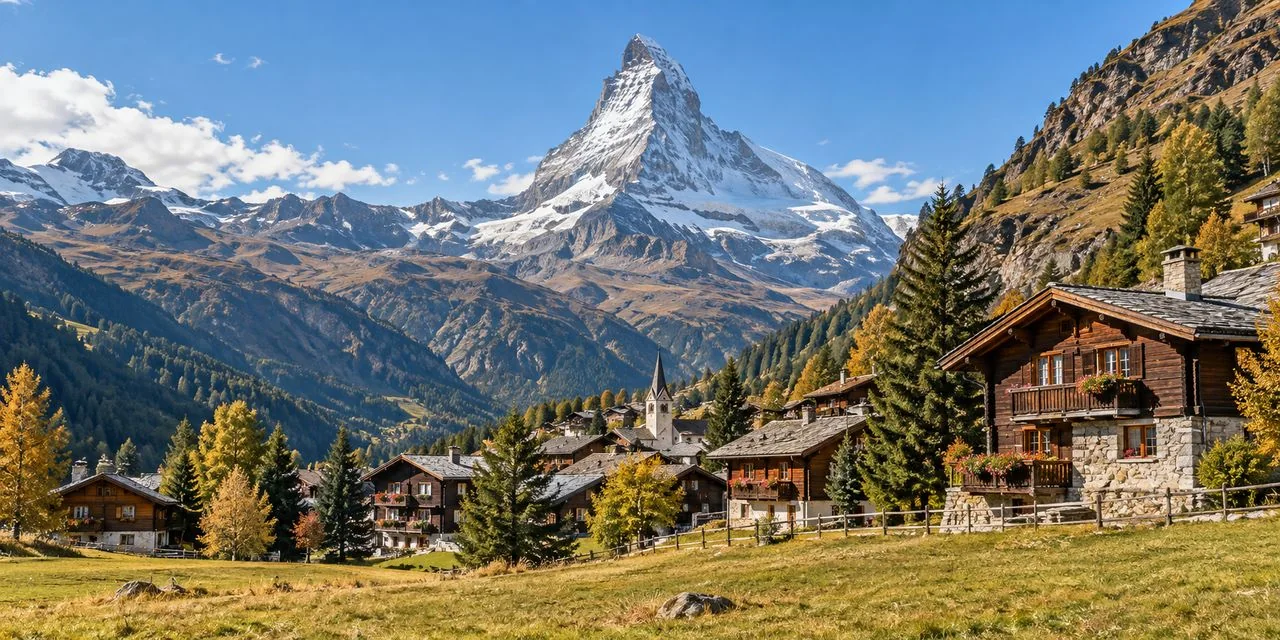
Swiss lump-sum taxation at a glance
Known in the market as lump-sum taxation or Swiss non-dom; in law, taxation on expenditure.
WHAT YOU OBTAIN
Agreed base, Swiss home
Tax assessed on living expenditure, with the base agreed in a written ruling and residence in the chosen canton.
WHO IT SUITS
Families making the move
Foreign nationals new to Swiss tax residence, or returning after ten years away, with no gainful activity there.
ANNUAL TAX
From CHF 111,000 a year
At the minimum base, a married couple pays about CHF 111,000 (Zug) to 146,000 (Lugano) a year.
FAMILY
Spouses assessed together
Spouses living together share one assessment and each meets the conditions. The base covers dependants' living costs.
PRESENCE AND RESIDENCE
Life centred in Switzerland
The family home is in Switzerland. Geneva asks third-country nationals to spend most of the year there.
MAIN STAGES
Two linked approvals
Canton and home, tax ruling, residence permit, the move, then the yearly assessment, in one file.
WHY FAMILIES CHOOSE SWITZERLAND
A known basis of taxation
The base follows living expenditure and housing cost and is recorded in a written ruling. Ordinary rates apply.
A simplified assessment
Expenditure replaces the usual assessment of income; the same calculation covers cantonal wealth tax.
Long-term value for Schengen travel and citizenship planning
A B or C permit gives visa-free travel across Schengen; time on either counts towards citizenship.
Who qualifies
| Condition | Requirement | In practice |
|---|---|---|
| Nationality | Foreign nationals. Swiss citizens are taxed under the ordinary system. | Both spouses hold foreign nationality. |
| Residence history | Swiss tax residence for the first time, or a return after at least ten years away. | Earlier stays in Switzerland are listed with dates. |
| Activity | No gainful activity in Switzerland. | Executive, board, consulting and remote work is reviewed before the move. Managing the family's own assets is permitted. |
| Spouses | Where spouses live together, each of them meets every condition. | One assessment for the couple, covering dependants' living costs. |
| Home in Switzerland | Tax domicile in Switzerland: the family makes its home there. | The rent or rental value of the home enters the tax-base calculation. |
| Canton | 21 of the 26 cantons apply the regime to cantonal tax; they are listed in “What the regime gives your family”. | Zurich, Schaffhausen, Appenzell Ausserrhoden, Basel-Landschaft and Basel-Stadt use ordinary cantonal taxation. |
KEY FIGURES
An eligibility review of both spouses, made before the home is chosen, settles the canton, the residence category and the tax-base calculation in one sequence.
Application eligibility · Non-EU nationals
| Applicant / family | Age and conditions |
|---|---|
| Main applicant | Age not specified; Foreign national establishing Swiss tax domicile for the first time or after ten years abroad, without Swiss gainful employment. Spouses living together must both qualify |
| Spouse | Age not specified; Provide a valid marriage certificate |
| Minor child | Under 18; Include birth or adoption and custody documents; parental consent where required; Age at application |
| Adding family later | Later family applications are assessed separately under the rules in force at that time |
| Nationality restrictions | Swiss citizens cannot use lump-sum taxation. EU/EFTA residence and third-country fiscal-interest residence follow different permit rules |
| Who the restrictions cover | Disclose all current and former nationalities, birthplace and residence history for the applicant and family |
| Residence conditions and exceptions | Ten years abroad is a tax-history condition, not a sanctions waiver. No age-55 rule is stated for Geneva’s fiscal-interest permit; the retiree route is separate |
| Sanctions and background checks | Background, security and source-of-funds checks apply. Sanctions affecting a person, bank or transfer can prevent completion |
Application eligibility · EU and EFTA nationals
| Applicant / family | Age and conditions |
|---|---|
| Main applicant | Age not specified; Foreign national establishing Swiss tax domicile for the first time or after ten years abroad, without Swiss gainful employment. Spouses living together must both qualify |
| Spouse | Age not specified; Provide a valid marriage certificate |
| Child under 21 or dependent | Age not specified; Children under 21, or older children who are dependent, under free-movement family rules |
| Parents of either spouse | Age not specified; Must be financially dependent on the applicant |
| Adding family later | Later family applications are assessed separately under the rules in force at that time |
| Nationality restrictions | Swiss citizens cannot use lump-sum taxation. EU/EFTA residence and third-country fiscal-interest residence follow different permit rules |
| Who the restrictions cover | Disclose all current and former nationalities, birthplace and residence history for the applicant and family |
| Residence conditions and exceptions | Ten years abroad is a tax-history condition, not a sanctions waiver. No age-55 rule is stated for Geneva’s fiscal-interest permit; the retiree route is separate |
| Sanctions and background checks | Background, security and source-of-funds checks apply. Sanctions affecting a person, bank or transfer can prevent completion |
The annual tax and the family budget
The base is the highest of three figures, reviewed each year; ordinary rates then apply.
ANNUAL TAX AND THE FEDERAL MINIMUM BASE
ANNUAL TAX AT THE MINIMUM BASE, MARRIED COUPLE, 2026
Single applicants: CHF 115,016 (Zug) to 160,328 (Geneva). 2026 rates; church and personal taxes excluded.
YOUR FIGURES
- Housing comparison figure
- CHF 504,000
- 2026 federal minimum tax base
- CHF 435,000
- The tax base is at least
- CHF 504,000
Living expenditure applies where it is higher; each canton sets its own cantonal minimum.
SETTING THE TAX BASE
FROM THE BASE TO THE TAX
YEARLY COSTS
Process and payment schedule
| Stage | You prepare | In person | Payment | You obtain |
|---|---|---|---|---|
| 01Canton and homePayment | Compare cantons; set out living expenditure and expected housing cost. | — | Quoted | Written tax-base calculation |
| 02Tax rulingPayment | Asset and income schedule, source of wealth, Swiss-source and treaty income. | — | Quoted | Ruling stating the agreed tax base |
| 03EU/EFTA permitPayment | Free-movement residence: proof of means, health insurance and housing. | — | Cantonal fee | Residence permit |
| 04Third-country permitPayment | Filed in the canton's fiscal interest, with the tax ruling. Geneva: approved by the State Secretariat for Migration. | Geneva: filed before entry | Cantonal fee | Residence permit |
| 05The movePayment | Sign the lease or purchase, arrange health insurance, move the family. | The family moves in | Housing and insurance | Swiss tax domicile |
| 06Yearly assessmentPayment | Keep records of living expenditure; the base is reviewed each year. | Life in Switzerland | Annual tax | Annual assessment |
The order of ruling, permit application, housing commitment and family move is agreed at the outset, and both authorities receive the same account of the family.
What the canton reviews
One coherent file serves the tax office and the migration office alike: income, assets, spending and activities, described the same way in each.
Financial and tax evidence
- Asset and income schedule
- Source-of-wealth records
- Annual worldwide living expenditure
- Expected housing cost: rent or rental value
- Swiss-source income and assets
- Income claiming treaty relief
Residence and family records
- Passports
- Civil-status records
- Certificate of criminal record, where required
- Lease, purchase or housing plan
- Letter setting out the reasons for the move
- EU/EFTA nationals: proof of means and health insurance
Activities and the ruling
- CV
- Account of executive, board, consulting and remote work
- Undertaking to carry on no gainful activity in Switzerland
- Tax ruling stating the base and conditions
- Assessment assumptions and yearly review duties
- Residence permit decision for each family member
Kept current, the same file supports each yearly assessment. A change of work, home or canton is reviewed with the adviser before it takes place, so that the arrangement continues to fit the facts.
What the regime gives your family
THE 21 CANTONS
Lake Geneva and the west
- Geneva
- Vaud
- Valais
- Fribourg
- Neuchâtel
- Jura
Bern and central cantons
- Bern
- Lucerne
- Zug
- Schwyz
- Uri
- Obwalden
- Nidwalden
North, east and south
- Aargau
- Solothurn
- Thurgau
- St Gallen
- Appenzell Innerrhoden
- Glarus
- Graubünden
- Ticino
TAX
About CHF 111,000–146,000 a year
Federal, cantonal and communal tax is computed on the base in the written ruling, in place of the usual assessment of income. At the minimum base, a couple pays about CHF 111,000 (Zug) to 146,000 (Lugano) a year.
HOME
A family home in Switzerland
The family lives in the canton and commune of its choice, with residence permits for spouse and children handled in the same file.
TRAVEL
Visa-free travel across Schengen
A Swiss B or C permit allows visa-free entry to the other Schengen states for up to 90 days in any 180-day period, whatever the holder's nationality.
SUCCESSION
No federal inheritance or gift tax
Inheritance and gift taxes are cantonal, and spouses and descendants are normally exempt. Schwyz and Obwalden levy no inheritance tax.
Your path to citizenship
Ordinary naturalisation is open after ten years of residence, with the C permit in hand.
- Residence in SwitzerlandTime on a B or C permit counts
- C settlement permitHeld when the application is made
- Ten qualifying yearsThree within the five years before applying
- Language and integrationSpoken B1, written A2
- Swiss citizenshipDecided by commune, canton and Confederation
Residence that counts
Adults generally need ten qualifying years in Switzerland, three of them in the five years before applying, and a C settlement permit at the time of application. Time on a B or C permit counts. Canton and commune usually ask for two to five years locally.
Language and integration
The federal standard is B1 speaking and A2 writing in a national language; a canton may set a higher level. Familiarity with Swiss life, local ties, financial self-sufficiency and tax and legal obligations kept in good order complete the assessment.
Citizenship and taxation
Commune and canton examine the application; federal authorisation precedes the canton's final decision. Switzerland has recognised dual nationality since 1992. From naturalisation the family is taxed under the ordinary system, so the change is modelled beforehand.
Speak with your adviser
Request a canton comparison, a written tax-base calculation and a separate residence-permit assessment.
HOW TO APPLY
Assessment
We review your family, aims and eligibility, and say plainly whether the programme fits.
Written proposal
You receive an itemised quotation, a document list and a timetable in writing.
Engagement and filing
Once engaged, we prepare the file, submit it and follow it through to the decision.
BRANDS

Identity planning and second-citizenship advisory